Massage Guides
What to Expect at Your First Massage: A First-Timer's Guide
By Touch.Town Editorial Team · Published
A practical guide for first-time massage customers in Australia. It covers preparing for the appointment, clothing and draping, what may happen on arrival and during the massage, discussing pressure, consent and your right to ask the provider to stop, oils and products, payment directly to the provider, and when to seek health advice first.
Key takeaways
- Check your booking time, location, service, duration and price before the appointment.
- Clothing depends on the massage and the provider; only undress to the level you are comfortable with.
- You can talk about pressure, temperature, position and comfort at any time.
- You can ask to avoid an area, change your mind or ask the provider to stop.
- Every provider works differently, so ask questions beforehand if you're unsure.
At your first massage, the provider may confirm the service you booked and ask about your preferences. What you wear, and whether draping is used, depends on the massage and the provider. You can discuss pressure and comfort, ask questions and request changes at any time. Every provider works a little differently, so it's fine to ask beforehand.
Before Your First Massage
A little preparation makes a first appointment feel more relaxed. None of the steps below are formal requirements. They are simply sensible checks that help avoid surprises on the day.
Check your booking details:
- Time: confirm the date and start time of your appointment.
- Location: confirm whether the appointment is at the provider's premises or at an agreed mobile location.
- Service: make sure you know which massage you have booked.
- Duration: check how long the appointment runs.
- Price: check the price before you go. Prices vary between providers and services; our guide to how much a massage costs in Sydney explains what can affect the price.
- Access: check any arrival instructions, such as parking, building access or which entrance to use.
Optional, but often helpful:
- Ask the provider about clothing or whether you need to bring anything, if you're unsure.
- Share information that may be relevant to the massage, such as an injury or an area you would prefer the provider avoids.
- Ask any other questions before the appointment, so you know what to expect.
If you haven't decided which style suits you yet, our guide to choosing a massage type compares common options, or you can browse massage options on Touch.Town.
What Should You Wear, and Do You Have to Undress?
There is no single clothing rule for massage. What you wear depends on the style of massage and on the provider.
Not every massage involves undressing. Some styles can be performed through clothing, while others usually involve working directly on the skin. Either way, you should only undress to the level you are comfortable with. If you would prefer to keep certain clothing on, you can say so.
Comfortable clothing that is easy to take off and put back on can be practical, especially if you are heading somewhere afterwards. If you're unsure what is expected for the massage you booked, ask the provider before the appointment.
If changing clothing is part of your appointment, ask the provider beforehand what privacy arrangements are available. Facilities differ between providers and locations, so it's worth checking rather than assuming.
What Happens When You Arrive?
Providers operate differently, so there is no standard arrival routine. When you arrive, your provider may:
- confirm the service you booked;
- ask about your preferences, including the pressure you like;
- ask whether there is anything relevant they should know;
- explain what happens next, such as how to position yourself.
Some providers have a longer conversation before starting, while others keep it brief. If your provider doesn't raise something you want to mention, such as an area to avoid or a pressure preference, you can bring it up yourself.
What Happens During a Massage?
How you are positioned depends on the type of massage. You might lie face down, face up, on your side, or sit, and you may change position partway through. Your provider may explain where to lie and when to turn over. If a position is uncomfortable, let them know so it can be adjusted.
As the massage goes on, you can keep communicating about comfort. Your preferences don't have to stay the same as they were at the start. If you would like a change to pressure, temperature or position, you can ask at any point.
Draping and Privacy
Draping means using a towel or sheet to cover parts of the body that aren't being worked on. Whether draping is used depends on the massage. For example, it may not apply to a massage performed through clothing.
Two different things are worth knowing:
- Touch.Town requirement: Touch.Town's Safety and Community Standards require providers to use appropriate draping where relevant and to respect customers' privacy and dignity.
- Professional guidance: Massage & Myotherapy Australia, a professional association, publishes guidance for therapists on draping and positioning. Not every provider belongs to an association, and Touch.Town does not certify that providers follow any association's guidance.
If you're unsure how draping or privacy will work for your appointment, ask the provider before the massage starts.
Pressure, Preferences and Communication
Pressure is one of the most personal parts of a massage. Some people prefer light, gentle pressure, while others prefer something firmer. Firmer pressure isn't automatically better. The right pressure is the one that feels comfortable and suits the massage you chose.
You can tell your provider your preferred pressure before the massage and ask for it to be changed at any time during the appointment. Short phrases work well, such as "a bit lighter, please" or "that's a good pressure."
It's also fine to mention:
- discomfort of any kind, so the provider can adjust;
- temperature, if you feel too warm or too cool;
- positioning, if you need to move or need extra support;
- conversation, whether you'd like to chat or would prefer quiet.
There's no expectation either way about talking. Many people stay quiet and relax, while others are happy to chat. If you want to compare how different massage styles approach pressure, see our guide to massage types.
Consent and Comfort: You Can Ask to Stop
Consent is a central part of every massage. Under Touch.Town's Safety and Community Standards, a provider must obtain your consent before starting. That consent can cover things such as the type of massage, the areas of the body to be massaged, pressure, the use of oils or products, and draping arrangements.
Consent to one part of the body does not automatically mean consent to another. You can:
- discuss your preferences before the massage;
- ask questions at any time;
- ask for pressure to be changed;
- ask the provider to avoid a particular area;
- ask for your position to be adjusted;
- say that you feel uncomfortable;
- change or withdraw your consent;
- ask for the massage to stop.
Touch.Town's standards say providers must respect requests like these. Providers also have boundaries, and customers are expected to treat them respectfully. Either person may end an appointment if they reasonably believe they are unsafe, consent has been withdrawn or boundaries have been crossed.
For most people, these conversations are simple and routine. Knowing you can speak up at any time can make a first appointment feel more comfortable.
Oils, Lotions and Massage Products
Not every massage uses oil or lotion. Whether products are used depends on the type of massage and the provider. Some providers may use oils, creams or lotions to help their hands move smoothly over the skin, while massage performed through clothing usually doesn't involve them.
Aromatherapy oils are not automatically part of a massage. They are generally associated with aromatherapy massage specifically.
Before your appointment, it's worth mentioning:
- any allergies or sensitivities to oils, nuts, fragrances or other products;
- any product preferences, such as unscented options or no product at all.
If you're unsure what your provider uses, simply ask.
Where Will Your Massage Take Place?
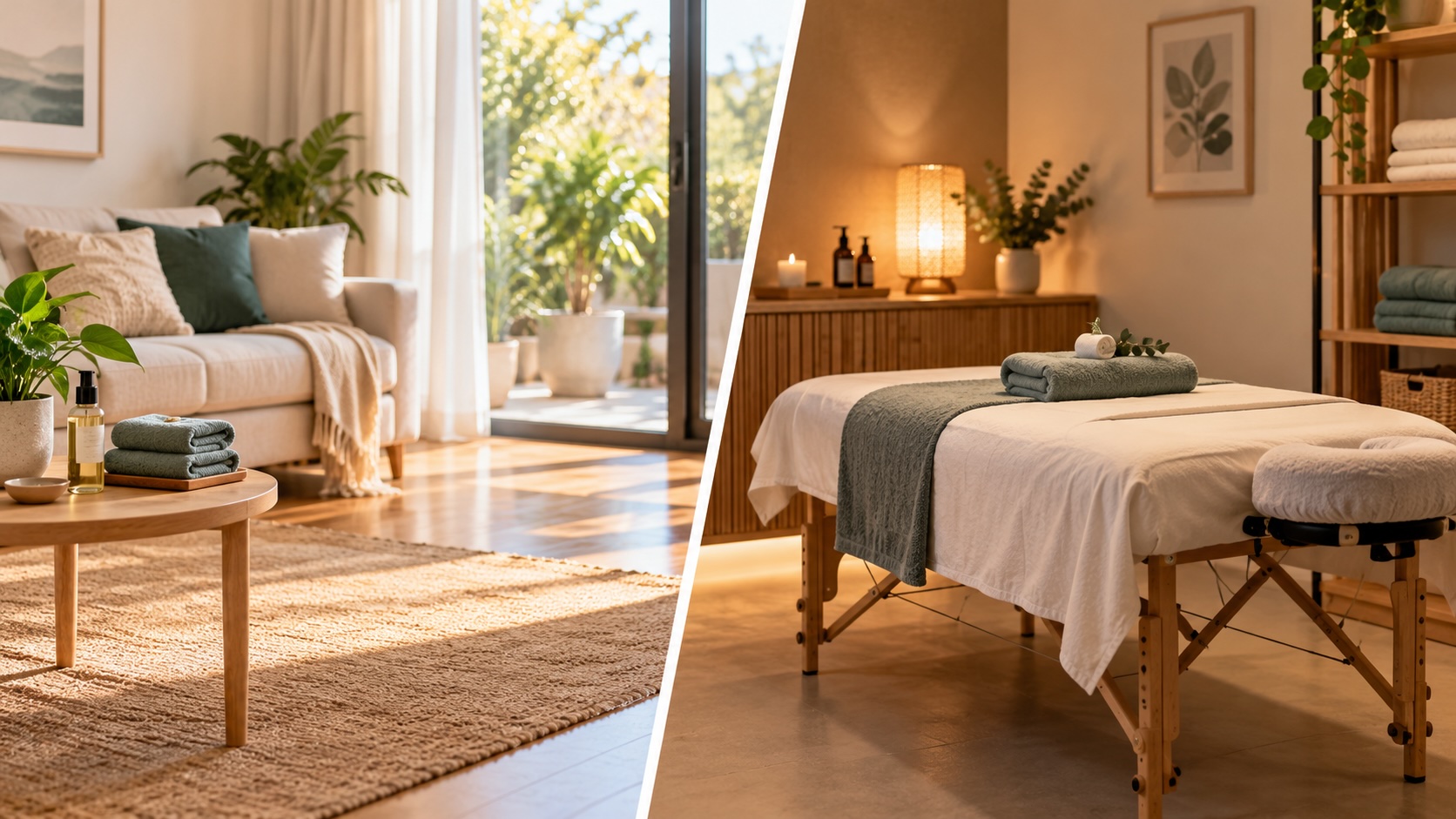
Depending on what the provider offers, your appointment may take place at the provider's premises or at an agreed mobile location, such as your home. Some providers offer both. You can browse locations to see which areas are covered.
For a full comparison of the two, including how to prepare a space at home, see our guide to mobile massage vs visiting a massage provider.
What Happens After the Massage?
When the massage finishes, your provider may give you a moment to sit up slowly and, where applicable, get dressed. If anything came up during the massage, it's a good time to ask follow-up questions.
On Touch.Town, customers pay massage providers directly. Touch.Town does not process customer payments for massage services, so confirm the payment method and any terms with your provider. If payment hasn't already been arranged, you may pay the provider at the end of the appointment. Our FAQ explains more about how payments and bookings work.
If you enjoyed the experience, you can make another booking with the same provider or try a different style next time.
Health Considerations Before a Massage
Massage is not a substitute for appropriate medical care. If you have symptoms, an injury, are pregnant, have a skin condition, have recently had surgery or have another health concern relevant to massage, you may wish to speak with a doctor or appropriate healthcare professional before your appointment. Health resources such as Healthdirect Australia and the Better Health Channel note that massage may not be suitable in some circumstances, and that professional advice may be needed first.
It's also a good idea to let your provider know about anything relevant, so they can consider it when planning the massage.
Sources
Frequently asked questions
What should I wear to my first massage?
Comfortable clothing that is easy to change in and out of is usually practical. What you wear during the massage depends on the style and the provider, so ask beforehand if you're unsure.
Do I have to undress for a massage?
No. Not every massage involves undressing, and some styles can be done through clothing. You should only undress to the level you are comfortable with, and you can tell the provider what you prefer.
What should I tell the massage provider before the appointment?
Mention your pressure preference, any areas you'd like avoided, allergies or sensitivities to products, and any injury or health information that may be relevant to the massage.
Can I ask for lighter pressure, firmer pressure or ask the provider to stop?
Yes. You can ask for pressure to be changed at any time, and you can ask the provider to stop. Touch.Town's Safety and Community Standards say providers must respect these requests.
Do all massages use oil?
No. Whether oil, lotion or another product is used depends on the massage and the provider. Let the provider know about any allergies, sensitivities or product preferences beforehand.
Should I talk during a massage?
It's up to you. Some people prefer quiet and others like to chat. It's always fine to speak up about pressure, temperature, position or anything that feels uncomfortable.
Do I pay Touch.Town for the massage?
No. Customers pay massage providers directly for massage services, and Touch.Town does not process customer payments for massage. Confirm payment arrangements with your provider.
Find the Right Massage Option for You
Explore massage options and locations on Touch.Town, then compare what independent providers offer before deciding what suits your preferences.
Browse Massage Options